Mosquito bites are more than just a small annoyance when it comes to newborns. Babies have sensitive skin, weaker immunity, and very limited ways to protect themselves during sleep. That is why many parents ask a simple but important question: are mosquito nets safe for newborns?
The answer is yes, mosquito nets can be a safe and effective way to protect newborns, but only when they are used correctly. Safety does not come from the net alone. It depends on how the net is installed, how it fits the sleeping space, and whether it stays away from the baby’s face during use. When these conditions are met, mosquito nets offer a practical and non-chemical way to reduce insect exposure during sleep.
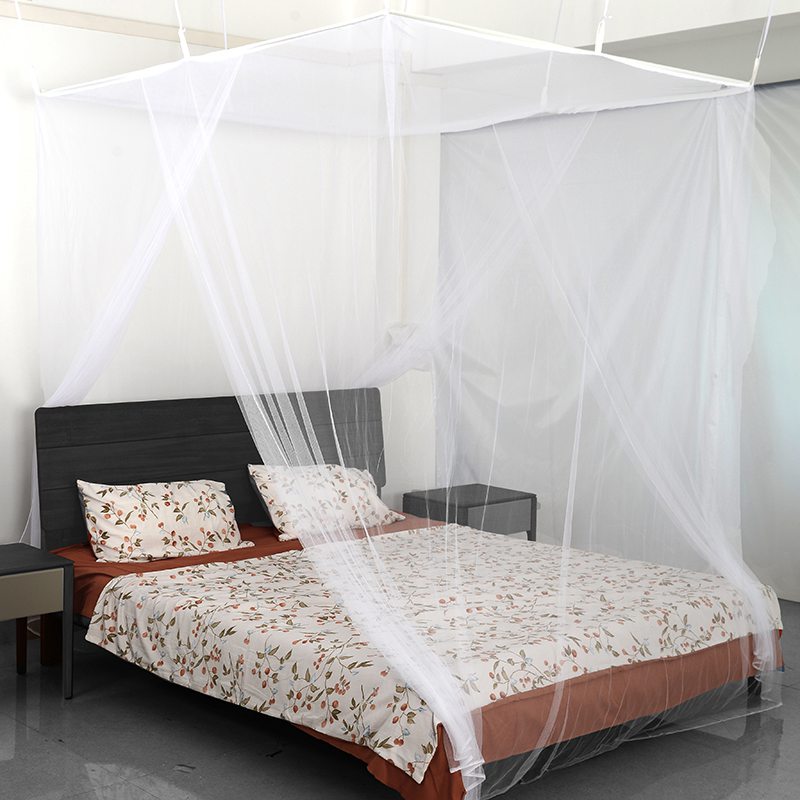
This is also where product design becomes relevant. A rectangular hanging mosquito net for a double bed, like the one shown here, reflects the type of structure many buyers evaluate when considering safety. It uses a breathable polyester mesh, a square hanging shape, and a stable four-point suspension system. These features are not just about appearance. They directly influence how the net behaves in real use.
When discussing newborn safety, the sleep environment always comes first. A baby’s sleeping area should be clear, stable, and free from loose materials that could cover the face. This principle applies whether you are using blankets, pillows, or mosquito nets.
A mosquito net becomes safe when it stays above and around the sleeping area rather than touching or collapsing onto it. If the net is loose or poorly installed, it may fall inward, which is not suitable for a newborn. On the other hand, a properly hung net creates a protective barrier while keeping enough space between the fabric and the baby.
This is why structure matters. A hanging net with defined support points is easier to keep in shape than one that drapes unpredictably. The rectangular design helps the fabric fall evenly around the bed instead of gathering in one place. That makes it easier for parents to manage the net in daily use.
For very young babies, direct use of insect repellents is often limited. Many parents prefer a physical barrier instead of applying anything to the baby’s skin. A mosquito net offers that barrier while still allowing airflow and visibility.
Another reason is comfort. A well-made net does not block air or light completely. It creates a soft enclosure that still feels open. In warm climates, this matters even more because airflow is part of sleep comfort.
For buyers and distributors, this preference is important. Parents are not only buying protection. They are also buying peace of mind. Products that feel safe, simple, and easy to use tend to perform better in the market than those that require complicated setup or unclear instructions.
Material choice is one of the first things buyers notice. Polyester mesh is widely used because it is lightweight, breathable, and more durable than very fine or delicate fabrics. It allows air to pass through while still blocking mosquitoes effectively.
The hanging mosquito net shown here uses polyester fabric with a balanced mesh density. It is designed to maintain airflow while keeping the structure stable over time. The material also holds its shape better after repeated use, which is important in homes where the net is opened and closed daily.
For newborn-related use, breathability is essential. A net that feels too dense can make the sleeping area feel enclosed. A net that is too thin may not hold its shape well. The right balance makes the product easier to trust and easier to use.
Many people focus only on fabric, but structure often makes a bigger difference in real use. A net that hangs evenly is easier to manage and less likely to collapse.
This product uses a square top with four hanging points, which helps distribute weight evenly. The height and size create more space inside the net, so the fabric does not sit directly on the bed surface. The double-door design also makes it easier to enter and exit without pulling the entire net out of shape.
For households with newborns, these details are practical. The net stays organized, and parents do not need to adjust it constantly. That reduces the chance of the net becoming loose or misaligned over time.
From a B-end perspective, the main concern is not whether mosquito nets are safe in theory. It is whether the product will work well in real homes. Parents worry about airflow, visibility, ease of use, and whether the net will stay in place after installation.
Another concern is durability. A net that tears easily or loses its shape after washing will not meet expectations, especially in family environments. That is why buyers often look for products that balance softness with strength.
There is also a communication challenge. Some products are marketed with overly strong claims, which can lead to misunderstandings. A better approach is to explain clearly what the product is designed for and how it should be used. This builds trust and reduces after-sales issues.
Using a mosquito net safely is not complicated, but it does require atTention to detail. The net should be installed securely so it cannot fall or shift easily. The fabric should stay away from the baby’s face and sleeping area. Openings should close properly to prevent insects from entering, while still allowing easy access for parents.
It is also important to check the net regularly. If the fabric becomes loose, damaged, or misaligned, it should be adjusted or repaired. Keeping the net clean and dry helps maintain its performance over time.
These steps may seem basic, but they are what make the difference between a product that feels reliable and one that feels uncertain in daily use.
Even though this product is designed as a hanging mosquito net for a double bed, it still connects closely to the question of newborn safety. Families often look for a solution that protects the entire sleeping area, not just a single crib or small space.
The rectangular design provides full coverage, while the breathable polyester mesh supports airflow and comfort. The structured hanging system helps the net stay in place, which is important in maintaining a safe setup.
For buyers, this makes the product easier to position. It is not just a decorative net. It is a practical solution for family sleeping environments where mosquito protection and ease of use both matter.
So, are mosquito nets safe for newborns? Yes, when they are used properly. The key is not the product alone, but how it is installed and maintained. A well-designed mosquito net can provide effective protection while keeping the baby’s sleeping space safe and comfortable.
For buyers looking at mosquito nets for family or newborn-related markets, the focus should be on breathable materials, stable structure, and clear product positioning. If you are comparing options or need help selecting the right design for your market, feel free to reach out. We can help you review specifications, discuss usage details, and provide guidance based on your sourcing needs.
Previous: What Is A Mosquito Net?