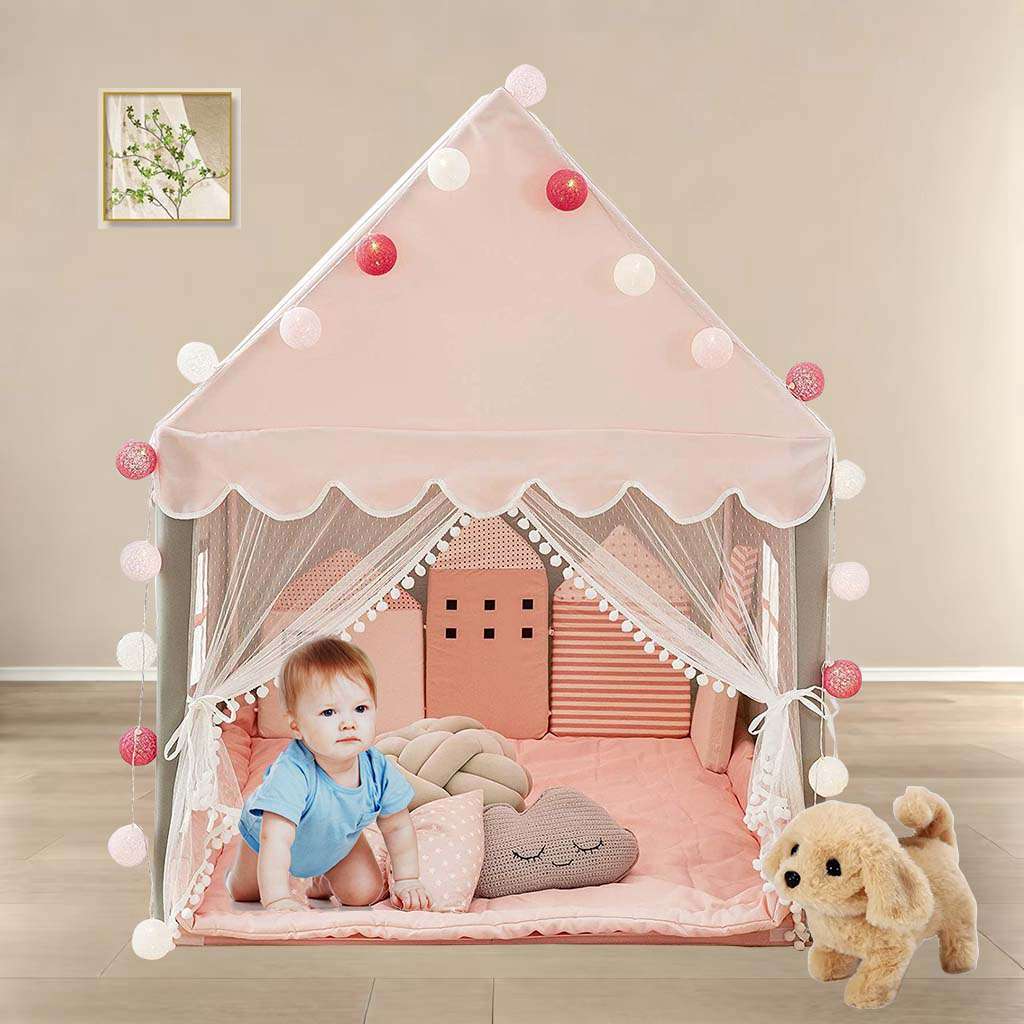
Low-cost play Tents can look attractive in a quotation sheet, especially when buyers need products for play corners, retail stores, daycare supply, indoor activity rooms, family entertainment areas, or seasonal children’s promotions. The risk is that price alone does not show whether the fabric, frame, stitching, edge treatment, accessories, and packaging are suitable for repeated child use.
For buyers sourcing a small indoor play tent, safety should be checked before design, color, or unit price. A tent that cannot meet strict child-use expectations may create more cost later through complaints, failed inspections, product returns, or removal from commercial play spaces.
children’s play tents are touched, pulled, crawled into, folded, dragged, and sometimes knocked over. If the fabric is too thin, easy to tear, or unsuitable for child-use environments, the tent may lose shape or expose unsafe edges after short use.
For commercial play areas, buyers should ask about fabric quality, stitching strength, frame support, and whether the material direction matches the intended market requirements. A cheaper tent is not useful if it cannot stay safe after repeated handling.
Indoor play products may be used near carpets, curtains, decorations, lights, or other soft furnishings. If the tent fabric has poor flame resistance, the product may fail customer safety review.
Buyers should confirm what fire-safety requirements apply in the target market before placing bulk orders. This is especially important for retail chains, daycare suppliers, activity room operators, and importers serving children’s products.
A play tent should not have exposed sharp parts, rough pole ends, weak connectors, or metal pieces that can scratch children during use. Even small accessories can create safety complaints if they are poorly finished or easy to detach.
Commercial buyers should check how the frame is covered, how the connectors are fixed, and whether the tent remains stable during normal play.
A safe small indoor play tent should not feel closed or stuffy. Mesh windows, openings, or ventilation areas help air move through the tent and also allow adults to observe children more easily.
For play corners and indoor activity areas, ventilation is not just a comfort feature. It supports safer supervision and better user experience.
Children do not use tents gently. They crawl in, push the sides, pull the fabric, and move around quickly. A tent that tips easily, collapses, or loses frame shape may not be suitable for commercial environments.
Buyers should test the tent after setup, not only inspect it in the package.
A tent used at home and a tent used in a commercial play area do not face the same pressure. Commercial users need more frequent setup, cleaning, storage, and supervision. Buyers should define whether the product will be used in retail displays, daycare spaces, hotel kids’ corners, indoor events, or playroom supply.
The product should be easy to assemble and store without damaging the fabric or frame. Complicated assembly can increase staff workload and create mistakes during repeated use.
The fabric should feel stable, and the seams should not open easily when pulled. Stitching quality is important because many safety issues begin at connection points.
During export shipping, tents can be compressed, folded, and handled many times. Packaging should protect the frame, fabric, corners, and accessories so the product arrives ready for inspection and resale.
Different markets may require different safety, flammability, labeling, and material checks for children’s products. Buyers should confirm these requirements before production starts, not after the goods are ready to ship.
The sample should be assembled, touched, folded, and tested in a practical way. Buyers should check fabric strength, frame stability, edge smoothness, ventilation, accessory safety, and packaging condition.
For repeat supply, buyers should keep records of material, size, color, packaging, labels, and test requirements. This reduces the risk of receiving a later batch that looks similar but performs differently.
A small indoor play tent should be selected as a children’s safety product, not only as a decorative toy. For commercial play areas, the right choice should balance material quality, flame-safety review, smooth accessories, ventilation, stable frame support, and export packaging.
The Indoor and Outdoor Game House Tent can be reviewed as part of a children’s play tent supply plan, especially when buyers need products for indoor activity spaces, retail channels, or family-use scenes.
For your next children’s play tent order, prepare the target market, safety requirement, size direction, packaging method, quantity plan, and intended use scene before confirming production. To learn more about our product range and supply support, please visit our official website: https://www.jymosquitonet.com/