Attaching a mosquito net to a bed is easiest when you start with two decisions: what style of net you are using, and where the net will be supported. A secure setup is not only about hanging fabric. It is about creating full coverage with enough interior space for comfortable sleep, while keeping the net edges sealed so insects cannot enter from gaps near the mattress, headboard, or floor.
This guide explains practical, repeatable ways to attach an Indoor Mosquito Net to different bed types, including common apartment and rental-room situations where drilling is not ideal. It also covers what to check after installation so the net stays stable night after night. JUNXING supplies indoor net options that support multiple home setups, available here: Indoor Mosquito Net.
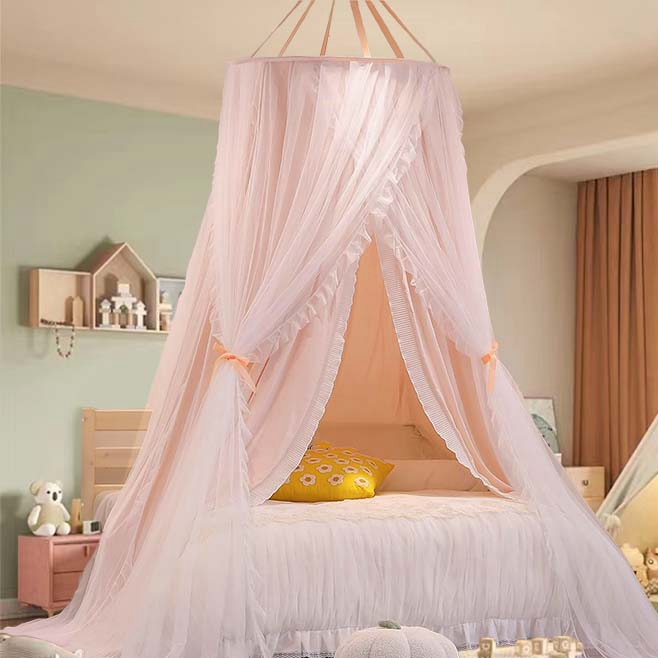
Before you open the package, confirm these four points. They determine which mounting method will feel solid rather than temporary.
Bed size and footprint
Measure mattress width and length, then add extra allowance so the net can drape without pulling tight at corners. A net that is exactly the same size as the mattress often leaves openings when you move during sleep.
Ceiling type and permission to drill
Concrete ceilings, gypsum board, wood beams, and drop ceilings require different hooks. If you cannot drill, choose adhesive hooks, bed-frame supports, or freestanding styles.
Bed position
A bed placed against a wall usually benefits from fewer hanging points and a tighter rear seal. A bed centered in the room needs more symmetrical support so the net does not tilt.
Net style
Indoor nets commonly fall into three categories:
Dome mosquito net
Each attaches differently and offers a different balance between speed, stability, and interior space.
You do not need everything listed below. Select based on your wall and ceiling conditions.
Tape measure
Pencil or removable marking tape
Step stool
Ceiling hook set or screw hooks
Adhesive ceiling hooks rated for the net weight
Nylon cord or adjustable hanging straps
Wall hooks or corner anchors for rectangular nets
Bed frame clamps or tie points if available
Safety scissors for trimming excess cord ends
If you are using adhesive hooks, clean the surface first and let it dry completely. Adhesives fail most often because dust or moisture weakens the bond.
A circular pop up style is often the fastest indoor solution because the frame holds shape and does not require multiple ceiling points.
Unfold and let the frame settle
Open the net in a clear area and allow the ring frame to fully expand. Avoid forcing corners because the frame tension needs to distribute evenly.
Center the net over the mattress
Lift the expanded net and place it so the center aligns with the center of the bed. Check that the entrance panel is positioned on the side you use most often.
Seal the perimeter
Tuck the net skirt under the mattress along all sides. This is a critical step. The tuck creates the insect barrier and prevents the net from shifting when you turn.
Stabilize if your floor is slippery
If the bed frame is light or the floor is polished tile, add simple tie points from the net edge to bed legs or frame corners. The goal is to prevent the net from walking sideways over time.
Test access and clearance
Sit on the bed, open the entrance, and close it again. Confirm the zipper or overlap closes without pulling the net off-center.
Rectangular nets create a clean canopy shape and often provide more usable interior space, but they need correct corner support.
Mark four points
Stand above the bed corners and mark four ceiling points. Keep them slightly outside the mattress corners so the net walls fall vertically rather than angling inward.
Install hooks
Use screw hooks for permanent installs or heavy-duty adhesive hooks for non-drill rooms. If using adhesive, press firmly and wait the recommended bonding time before hanging weight.
Hang the net with adjustable cords
Attach cords to each net corner loop. Adjust lengths so the net top is level. A level top prevents one side from sagging and opening gaps.
Tuck the bottom edge under the mattress
Just like pop up nets, the mattress tuck is what seals the barrier. Smooth the skirt so it does not bunch at corners.
Add side control if needed
If the net flares outward too much, add light ties to bedposts or the frame. Keep tension gentle so the net fabric stays relaxed and quiet during movement.
Use two ceiling hooks along the bed centerline
This approach works well for narrow rooms. Place one hook near the head area and one near the foot area.
Use a top ridge line
Run a cord between the two hooks, then clip the net top along the cord. This creates a stable roof line without needing four separate points.
Seal the back edge carefully
Because the bed touches a wall, ensure the net fabric sits flush behind pillows and does not leave a vertical gap near the headboard.
A dome net is designed to create headroom without the full ceiling canopy look. It commonly uses one central suspension point plus shape control.
Identify the center point above the bed
The dome should sit centered so the structure distributes evenly. If the dome pulls toward one side, it can press against your face during sleep.
Install a central hook
Use a ceiling hook or an adhesive hook rated for the load. For long-term stability, a proper ceiling anchor is more reliable in humid environments.
Hang the dome peak and adjust height
The top should be high enough that you can sit up without touching the net, but not so high that the side walls lift and create gaps at the mattress line.
Control the net sides
Some dome nets include side loops. Use light ties to keep the dome symmetrical, especially if there is airflow from a fan or air conditioner.
Tuck and seal
Tuck the skirt under the mattress fully. The dome shape only works as a barrier if the bottom seal is consisTent on all sides.
| Net style | Typical support points | Best for | Key installation focus |
|---|---|---|---|
| Circular pop up | No ceiling points, frame-supported | Fast setup, rentals, frequent moving | Centering and full mattress tuck |
| Rectangular | 2 or 4 ceiling points | Maximum interior space, neat canopy look | Level top, corner alignment, stable hooks |
| Dome | 1 main point plus optional side ties | Good headroom with simple structure | Center hook position and balanced side tension |
After you attach the net, do a simple seal check. Most complaints come from small gaps, not from the net fabric.
Mattress tuck depth
Tuck at least a full hand-width under the mattress. Shallow tucks pull out when you shift weight.
Corner sealing
Corners are where gaps form first. Smooth fabric at corners and avoid thick bunching that can lift the skirt.
Entry closure
If the entrance is zippered, ensure it closes without tension. If it is overlap style, make sure the overlap faces away from airflow to reduce billowing.
Clearance from sharp edges
Bed frames with sharp corners can abrade net fabric over time. If needed, add a soft edge protector or reposition tie points.
Fan and airflow control
Strong airflow can push net walls inward. Add light side ties to keep shape without stretching the fabric tight.
The net leans to one side
Re-center the net and re-check hook positions. For rectangular nets, adjust cord lengths until the top panel is level.
The bottom keeps lifting
Increase tuck depth, or add simple clips at bed corners that secure the skirt to the frame.
The zipper feels tight
Raise the net slightly or shift the entrance orientation so the zipper line is not pulling across a corner.
The net touches your face at night
Increase top height slightly or switch to a style with more headroom, such as a dome or a rectangular canopy with better corner spacing.
Shake out dust regularly to keep mesh airflow comfortable
Keep the bottom edge clean so tucking stays smooth and sealed
Avoid harsh chemicals that weaken fibers
If you wash the net, dry it fully before re-installing to prevent odor and to protect adhesives if you use adhesive hooks
Inspect hook points and cords monthly in humid climates
Attaching a mosquito net to a bed is straightforward when you match the net style to your room constraints and focus on two essentials: stable support and a complete bottom seal under the mattress. Circular pop up nets prioritize speed and convenience, rectangular nets maximize interior space with multi-point hanging, and dome nets provide headroom with minimal hardware. Once installed, a quick gap check and simple stabilization steps prevent shifting and keep protection reliable night after night.
For indoor net options that support common home setups, view the product range here: Indoor Mosquito Net.