Crib mosquito nets can be safe when they are designed for indoor sleep spaces and used correctly. The purpose is straightforward: create a physical barrier that keeps mosquitoes and small insects away from a baby’s sleeping area, especially in warm seasons, high-humidity regions, or homes that rely on open windows for ventilation. The safety question matters because a crib is a controlled sleep environment, and any accessory must avoid introducing risks such as loose fabric, poor airflow, unstable attachment, or entanglement.
This guide explains what makes a crib mosquito net safe, what to avoid, how to install and maintain it properly, and how to choose a reliable indoor net for nursery use. For product reference, you can explore JUNXING’s indoor category here: indoor mosquito net.
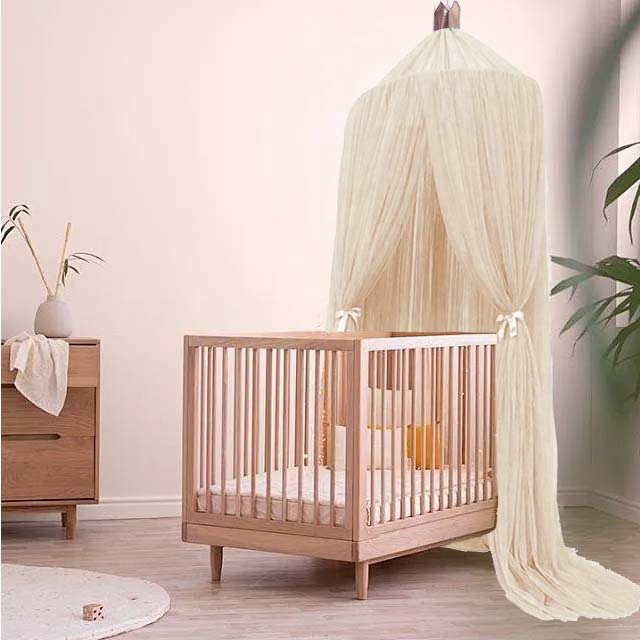
A safe crib mosquito net should do two things at the same time:
Block insects consisTently, including around the edges where gaps often form
Maintain a stable sleep environment without creating new hazards
Safety is not only about mesh. It is about the full system: material, airflow, shape, attachment method, and day-to-day handling by adults who may install it quickly during bedtime routines.
A crib net is safest when it stays securely in place, does not collapse onto the baby, allows steady airflow, and does not create loose sections that can be reached or pulled into the crib.
A crib net may look simple, but small design differences matter. These criteria are the most important for safe indoor nursery use.
Stable structure that prevents collapse
Nets that are supported by a defined shape or frame reduce the chance of the mesh falling inward. A stable structure also helps keep the mesh away from the baby’s face and hands.
Secure attachment that resists shifting
A net should anchor in a way that stays consistent when adults lift it for access or when the crib is bumped. If the net slides, gaps form, and loose mesh may be pulled inward.
Breathable mesh that supports ventilation
The mesh should allow airflow and should not feel like a dense fabric layer. Airflow matters in warm rooms and when the net covers a large opening.
Correct sizing for the crib and mattress height
Oversized nets can bunch and create loose folds. Undersized nets can pull tight and spring back, sometimes creating movement or gaps.
Smooth finishing and enclosed edges
Well-finished seams reduce the chance of fraying and reduce snag points on crib rails and nursery furniture.
When these factors align, a crib mosquito net behaves more like a stable barrier and less like an extra piece of loose fabric in the sleep space.
Many Indoor Mosquito Nets use polyester mesh because it is lightweight, durable, and maintains shape well with regular use. Polyester is also commonly used because it can be manufactured with consistent mesh openings while staying soft enough for home environments.
From a practical standpoint, a safe crib net material should:
Feel smooth, not abrasive, when touched
Resist tearing from daily opening and closing
Maintain consistent mesh structure without stretching into large gaps
Be easy to wash and dry without warping
If a net is labeled as 100 percent polyester, that tells you the fiber type, but the real performance depends on how the mesh is woven or knitted and how the seams are finished. The best approach is to choose an indoor net designed for repeated home use, not a temporary outdoor barrier.
Crib mosquito nets are safest when the risks are understood and actively prevented. The following issues are the most common causes of unsafe use.
Loose mesh inside the crib space
Any loose mesh that can be pulled into the crib increases risk. The solution is proper sizing and secure anchoring so the net stays outside the baby’s reach.
Net collapsing onto the baby
Collapse risk is higher with poorly supported designs or when the net is draped from a single point without tension control. Choose a stable structure and avoid setups that allow the mesh to sag.
Gaps at the bottom edge
Gaps defeat the purpose and may lead parents to adjust the net repeatedly during the night, creating instability. A net should seal around the perimeter cleanly.
Unsafe attachment methods
Avoid makeshift attachment using long strings, loose ties, or improvised clips that can detach. Use the intended fastening method provided by the product design.
Heat buildup due to room conditions
Even breathable mesh can feel warmer if the room is hot and still. Use a fan placed for indirect airflow and keep the room within a comfortable range.
Wear and tear that changes the mesh behavior
Small tears can expand and create openings. Repair damage early and replace the net if the fabric becomes weak.
Parents should also avoid placing other loose items in the crib. A mosquito net does not replace safe sleep practices. It is an added barrier outside the crib interior and should remain managed as such.
A safe installation aims for a stable barrier that stays outside the baby’s reach while allowing full caregiver access.
Practical installation guidance:
Place the net so the mesh does not touch the baby when lying down
The net should create a clear space above the baby, not drape inward.
Ensure the perimeter is sealed without over-tight stretching
Stretching can cause rebound movement and can make the net shift when lifted.
Confirm attachment points are secure and do not loosen when opened
Open and close the net several times to test whether it stays aligned.
Keep the net clear of sharp crib corners and hardware
Sharp points can create tears that expand.
Make access predictable for caregivers
A design that is easy to open reduces rushed handling. Rushed handling is a common cause of shifting and loose folds.
If you need an indoor net built for home sleeping spaces, JUNXING’s indoor mosquito net category provides options intended for consistent indoor protection and everyday routines.
A crib net should be checked quickly before sleep. This becomes a simple habit and prevents the main issues that cause parents to stop using the net.
Nightly checklist:
The net is not touching the baby’s face, hands, or blanket area
There are no loose folds or bunched mesh hanging inside the crib space
The bottom edge sits evenly with no visible gaps
The mesh is intact with no tears or pulled threads
The attachment points feel stable when you open and close the access area
If any part of the net shifts easily, that is a signal to adjust the installation or switch to a more stable design.
A crib net must stay clean because it sits close to a baby’s sleep environment. Dust and residue can also affect how well the mesh drapes and seals.
Maintenance principles:
Wash gently to preserve mesh structure
Aggressive washing can stretch the mesh or weaken seams.
Dry fully before reuse
Damp nets can attract dust and can develop odor.
Inspect seams and corners after cleaning
High-stress points can loosen over time.
Repair small damage early
A small hole can become a larger tear quickly when the net is opened repeatedly.
Store properly when not in use
Folding neatly and avoiding hard creases helps maintain structure.
A net that stays structurally consistent is safer because it maintains the intended spacing and sealing.
If you are buying a net specifically for a baby’s crib, prioritize safety-related performance over decoration.
Selection priorities:
Indoor-use design with stable structure
Breathable mesh that supports airflow
Secure attachment that minimizes shifting
Size compatibility with crib dimensions and mattress height
Smooth finishing that reduces snagging and fraying
Easy caregiver access for nighttime checks
For families who rely on open windows or live in mosquito-heavy seasons, a well-designed indoor net can reduce bites and reduce the need for sprays or scented repellents near the sleeping area. The key is choosing an indoor net built for consistent daily use and installing it carefully.
To compare options intended for indoor living spaces, you can start with JUNXING’s indoor mosquito net category and select by size, structure, and access style.
Crib mosquito nets can be safe when they are breathable, stable, properly sized, and securely attached so the mesh stays outside the baby’s reach. The main risks come from loose fabric, collapse, shifting attachments, and gaps created by incorrect sizing or rushed handling. By choosing an indoor net designed for nursery routines, installing it to prevent sagging, and checking the seal and integrity each night, families can use crib mosquito nets as a practical protective barrier without compromising a stable sleep environment.