mosquito nets are highly effective when they are correctly specified, properly installed, and kept in good condition. Their core advantage is simple: they create a physical barrier that prevents mosquitoes from reaching the person inside. Unlike sprays or plug-in repellents that depend on continuous chemical release, an Indoor Mosquito Net works as a passive protection layer throughout the night, as long as there are no gaps, tears, or open edges.
For wholesalers and project buyers, effectiveness is measured by fewer complaints, fewer bite incidents, and repeatable performance across large quantities. JUNXING manufactures indoor mosquito net solutions designed for stable mesh consistency and reliable everyday use in homes, rentals, and multi-room programs.
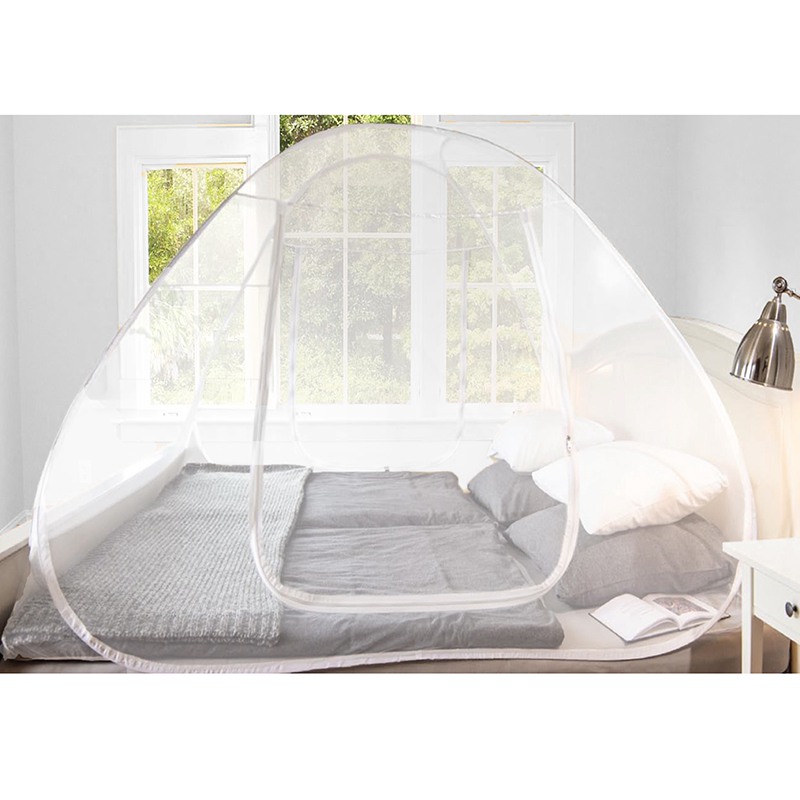
A mosquito net is built to block mosquitoes and other flying insects from direct contact with skin during sleep or rest. This is especially valuable at night, when many mosquito species are most active. The net does not eliminate mosquitoes in a room, and it does not stop bites that occur outside the net. Its effectiveness comes from isolating the protected space and maintaining that barrier continuously.
In indoor environments, nets are most effective when the sleeping area is the main exposure point. When people spend most high-risk hours in bed, a net can significantly reduce bite frequency. In spaces where doors remain open, windows lack screens, or foot traffic is high, nets still help at the point of rest, but overall exposure depends on room control strategies.
The market often describes mosquito nets as effective or ineffective, but performance is usually determined by three practical factors: mesh design, fit and sealing, and user behavior.
Mesh design influences whether mosquitoes can pass through openings or bite through the fabric when it rests directly on skin. Fit and sealing determine whether insects can enter through the bottom edge, zipper areas, or ceiling suspension points. User behavior matters because an excellent net will still fail if it is not fully tucked, if the entry is left open, or if the net is stored in a way that creates tears.
For wholesale programs, these factors matter because they define product returns and reputation. Selecting a durable indoor mosquito net structure and providing clear installation guidance typically improves field results more than changing marketing claims.
Mesh density is a balance between breathability and insect blocking. In many indoor applications, a well-designed mesh provides airflow while preventing mosquito entry. In higher-pressure mosquito regions or areas with smaller insects, a tighter mesh may be preferred, but it must still be workable for installation and daily use.
The key point for distributors is consistency. If the mesh opening varies across batches, customer experience becomes unpredictable. Stable mesh construction, uniform yarn tension, and consisTent finishing help deliver repeat performance across repeat orders. This is one reason buyers often prioritize suppliers who can maintain specification control at scale rather than changing materials between production runs.
Many mosquito net complaints are not caused by the fabric itself. They come from poor installation conditions: the net collapses onto the sleeper, the bottom edge is not sealed, or the hanging point creates uneven tension that leaves gaps at corners.
Indoor nets tend to perform best when the structure maintains interior volume. A net that stays off the body reduces the chance of bite-through contact and improves comfort. It also makes tucking and sealing easier because the net drapes predictably instead of twisting.
For multi-room rollouts, installation repeatability is important. If the net requires complex steps, different installers may produce different results. A practical design is one that achieves reliable sealing with simple, consistent installation behavior.
A mosquito net remains effective only while it stays intact. Small holes, seam failures, or damaged entry points can reduce protection quickly because mosquitoes need only a small opening to enter.
For indoor use, routine checks help preserve effectiveness:
Look for tears near corners, zipper seams, and the lower edge
Keep the net clean to prevent fabric weakening from dust buildup
Store properly when not in use to avoid snagging and deformation
In high-turnover environments, such as rentals or seasonal housing, durability becomes part of effectiveness. A durable product that maintains shape and seam integrity reduces the chance of protection failure between room resets.
| Indoor Scenario | Expected Net Effectiveness | What Improves Results |
|---|---|---|
| Bedrooms with closed doors and basic ventilation | High | Full tuck-in seal, stable hanging structure |
| Rooms with open windows but no window screens | High at the bed zone | Better sealing at bottom edge, keep net off skin |
| High-humidity areas with frequent washing | Moderate to high | Strong seams, stable fabric, careful cleaning routine |
| Multi-room properties with different installers | Variable without standardization | Clear install method, consistent sizing and accessories |
This comparison helps wholesalers set correct expectations and build guidance that reduces complaints.
Some markets need non-standard sizing, stronger seams, specific entry formats, or a mesh level matched to local insect pressure. In these cases, a custom indoor mosquito net program can improve real-world effectiveness because the net fits the bed and room layout correctly, seals more reliably, and withstands the local use cycle.
For distributors building long-term product lines, customization can also support consistent packaging, labeling, and accessory sets that make installation easier and reduce misuse.
JUNXING supports wholesalers with stable production and flexible specification options through our indoor mosquito net range.
Mosquito nets are highly effective as an indoor protection solution when the mesh is properly selected, the net is correctly sealed, and the product remains intact over time. Their strength is reliable physical separation that works continuously without power or active chemicals, making them a practical choice for everyday use and large-scale distribution programs. The most common causes of reduced effectiveness are gaps, poor installation, and fabric damage, which can be addressed through better product structure and clearer usage guidance.
If you are planning a wholesale program or need help selecting an indoor mosquito net that matches your market, contact JUNXING. Share your target region, preferred size range, and installation style, and we will provide product guidance, sampling support, and supply recommendations designed to improve field performance and reduce after-sales issues.
Previous: How To Fix A Round Mosquito Net?